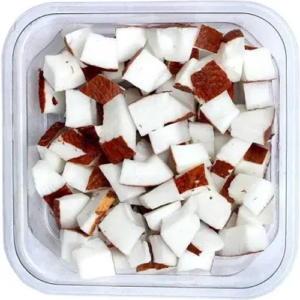
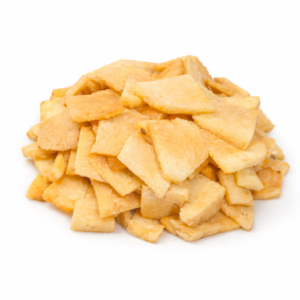
Coconut chunks are pieces of fresh coconut flesh that are rich, creamy, and naturally sweet. They have a firm texture and a mild, nutty flavor that enhances both savory and sweet dishes.Packed with healthy fats, dietary fiber, vitamins, and minerals, coconut chunks help support heart health, aid digestion, and provide sustained energy. They are also known for their antioxidant properties.Coconut chunks can be used in curries, chutneys, desserts, salads, or even eaten raw as a snack, adding flavor, texture, and nutrition to meals.
Grated coconut is fresh coconut that has been finely shredded and is widely used in cooking. It adds a rich, mildly sweet flavor and texture to dishes like curries, chutneys, and desserts. Rich in healthy fats, fiber, and essential nutrients, grated coconut supports energy, digestion, and overall health.
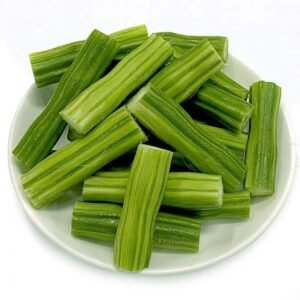
Drumstick, also known as Murungai, is the long, slender pod of the drumstick tree, commonly used in South Indian cuisine. It has a slightly sweet, earthy flavor and a tender texture when cooked, while the seeds inside are soft and nutritious.Rich in vitamins A, C, and K, calcium, iron, and antioxidants, drumstick helps boost immunity, strengthen bones, support digestion, and improve overall health. It is also known for its blood-purifying properties.Drumstick is commonly used in sambar, kootu, curries, and soups, adding flavor, nutrition, and a unique texture to meals.
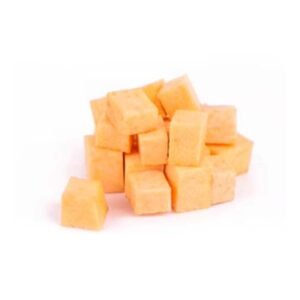
Elephant Yam (Suran / Karunai Kizhangu) is a traditional South Indian superfood known for its rich earthy flavor and high nutritional value. Carefully sourced by Navaneetham Keerai, this fresh, high-quality tuber is perfect for preparing authentic dishes like varuval, curry, and kuzhambu.
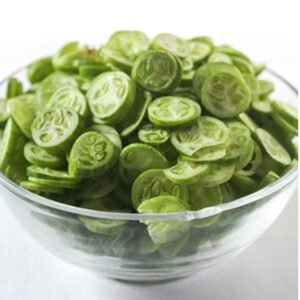
Ivy Gourd, also known as Tindora or Kovakkai, is a small, green vegetable commonly used in South Indian cuisine. It has a mildly bitter and slightly sweet taste and retains a firm texture when cooked.
Rich in dietary fiber, vitamins A and C, and antioxidants, ivy gourd supports digestion, boosts immunity, and helps maintain healthy blood sugar levels. It is also low in calories, making it a nutritious addition to daily meals.
Ivy gourd is often prepared as stir-fries, curries, kootu, or pickles, adding both flavor and health benefits to your diet.